Starting solid foods is a big milestone for both babies and parents.
If you’re raising a baby in Japan, you might feel overwhelmed by the number of baby products available — especially if you’re unfamiliar with Japanese brands and food culture.
This guide focuses on what you actually need to start weaning in Japan, based on real-life experience. I’ll also share what you can skip, so you don’t end up buying unnecessary items.
When Do Babies Start Solid Foods in Japan? Rinyu-syoku
In Japan, babies usually start solid foods (離乳食 / rinyushoku) around 5–6 months old, similar to many other countries.
Most pediatricians in Japan recommend:
- Starting with once a day
- Offering very smooth, soft textures
- Gradually increasing variety and frequency
Many parents begin with simple rice-based foods before introducing vegetables and protein.
How to Decide What to Buy Before Starting Weaning
Before buying anything, it’s important to understand that you don’t need much at the beginning.
What you actually need to start solid foods in Japan
At the very start of weaning, your baby is learning how to eat — not eating full meals yet.
The goal is exposure, not volume.
You only need a few basic items to begin:
- A safe way to seat your baby
- A spoon suitable for first foods
- One or two simple feeding tools
That’s it.
What you don’t need at first (save your money)
Many parents (myself included) are tempted to buy everything at once.
In reality, some items can wait until later stages — or may never be used.
You don’t need:
- Full tableware sets
- Multiple types of plates and bowls
- Expensive food makers right away
- Special storage containers at the beginning
Keeping it simple helps you adjust as your baby’s preferences and routine become clearer.
Baby Weaning Essentials You Actually Need in Japan
Here are the core items that are enough to start weaning comfortably.
Baby Chair or High Chair
Your baby needs to be safely supported in an upright position.
In Japan, compact high chairs are common, especially for smaller homes.
Some families start with:
- A baby chair with straps
- A chair that attaches to a regular dining chair
Choose something stable and easy to clean.
NOVUS High Chair
My son uses this chair. It’s easy to get in and out. Only con that I feel is the rear legs are very wide.
Baby Spoons for First Foods
Japanese baby spoons are often:
- Small
- Shallow
- Made of soft silicone or plastic
You only need one or two spoons at first. Your baby will take tiny amounts, so there’s no need for multiple sets.
Although, I bought a lot of spoons as you can see the picture below. I’m going to share my favorite ones.
Spoon – Richell Spoon with thermal sensor
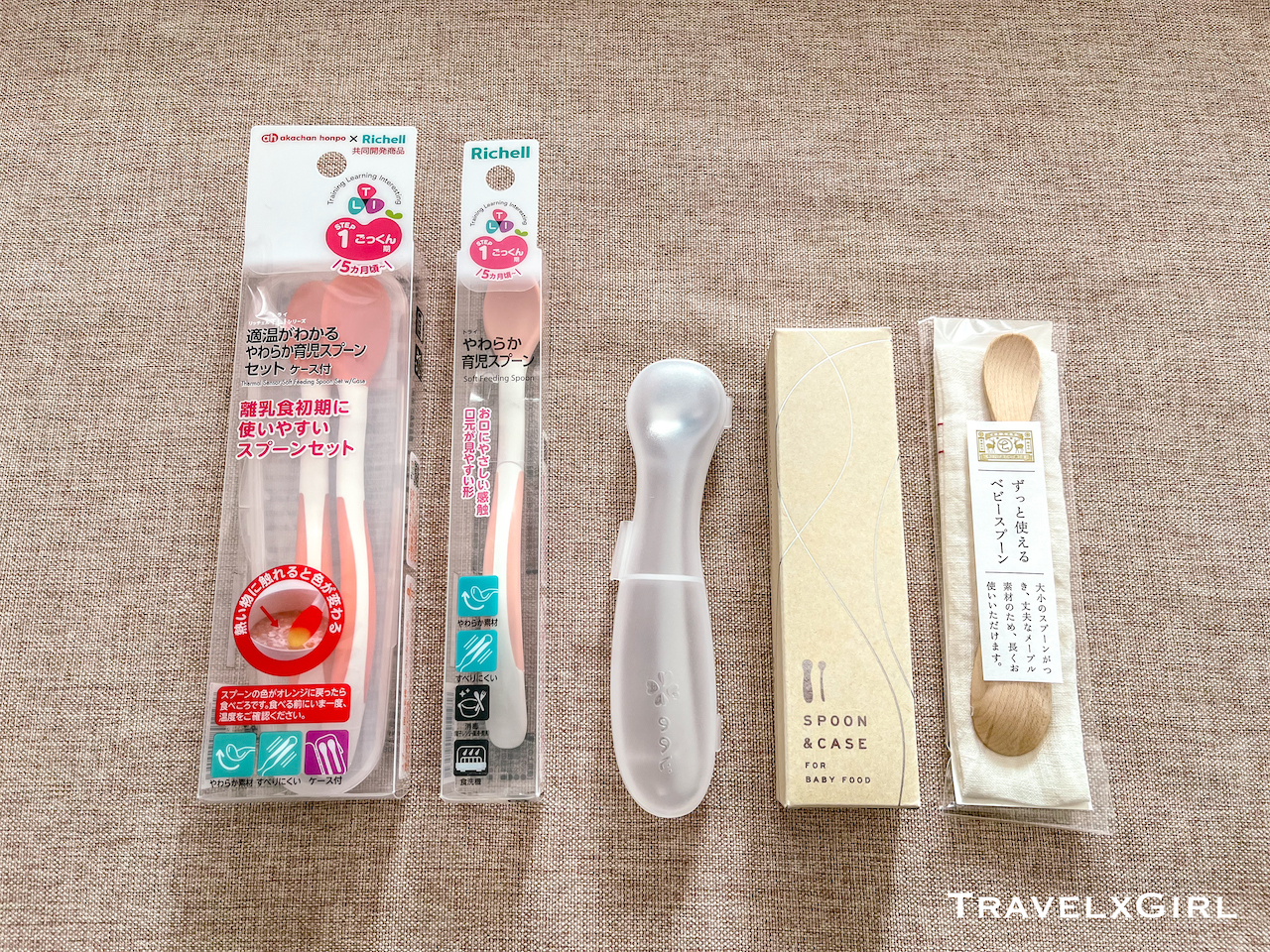
Richell Spoon (the left on the pic above) is great because it changes its color based on how warm/hot. Also the case was convenient when we took them outside.
Nonoji Spoon with a Case
Nonoji spoon (the middle on the pic above), is also great. The curve helps us eat easily.
I used the wooden one for the beginning, but it broke once my son got teeth.
Small Bowl or Feeding Plate
At the beginning, one small bowl is enough.
Look for:
- Lightweight material
- Non-slip bottom (helpful but optional)
- Easy-to-wash design
Many Japanese parents use simple bowls rather than divided plates at first.
Skater Cup
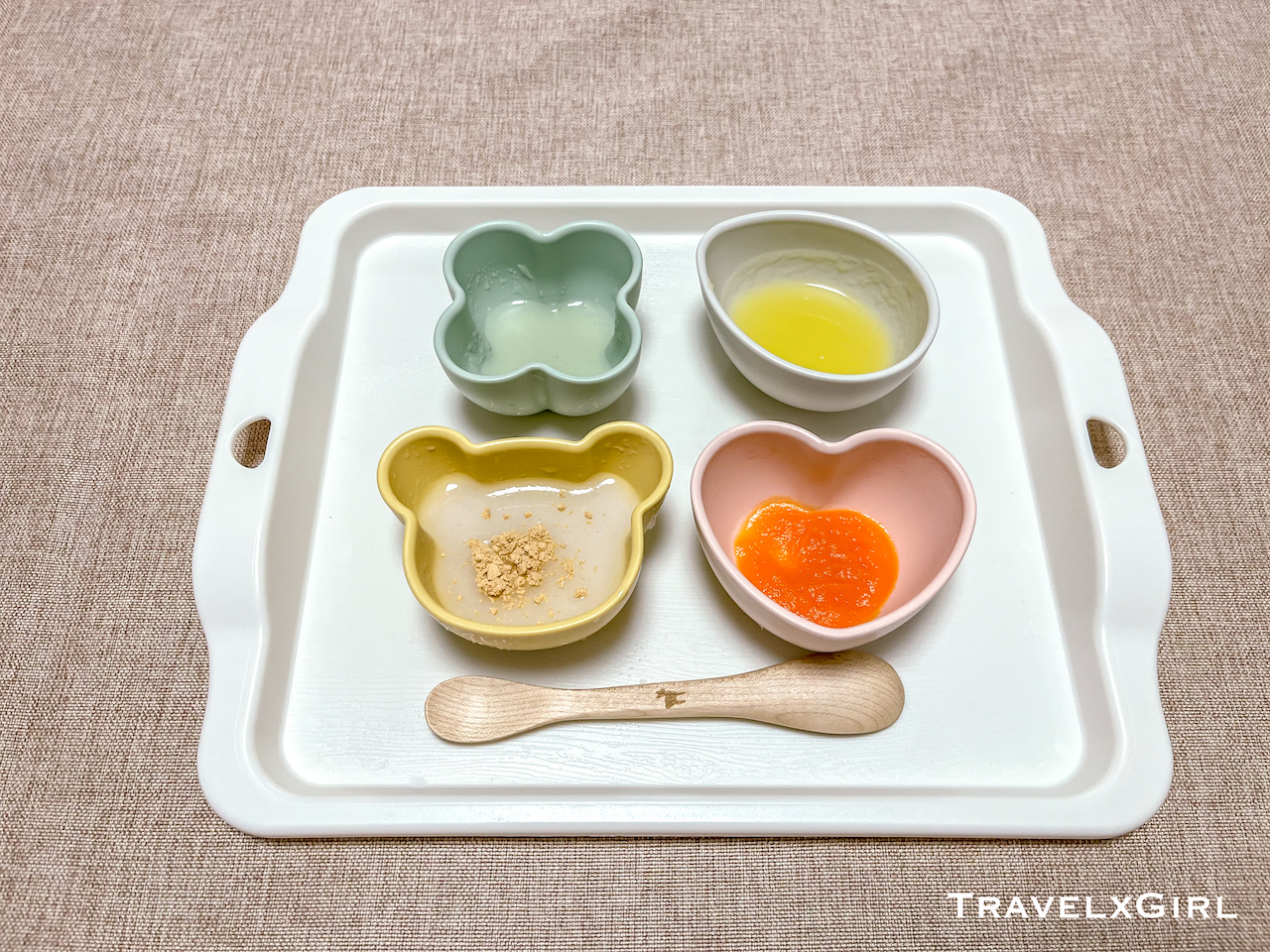
I chose Skater Cup, set of 4 small cups! These are cute and I think it’s very convenient fot small amount of food. I still use them for my son who is 1 year and 10 months to eat yogurt, small snacks, etc.
Bib or Easy-to-Clean Feeding Wear
Weaning is messy — this is unavoidable.
In Japan, you’ll see:
- Silicone bibs with food catchers
- Waterproof cloth bibs
Choose something that dries quickly and doesn’t require complicated washing.
Baby Bjorn Bib
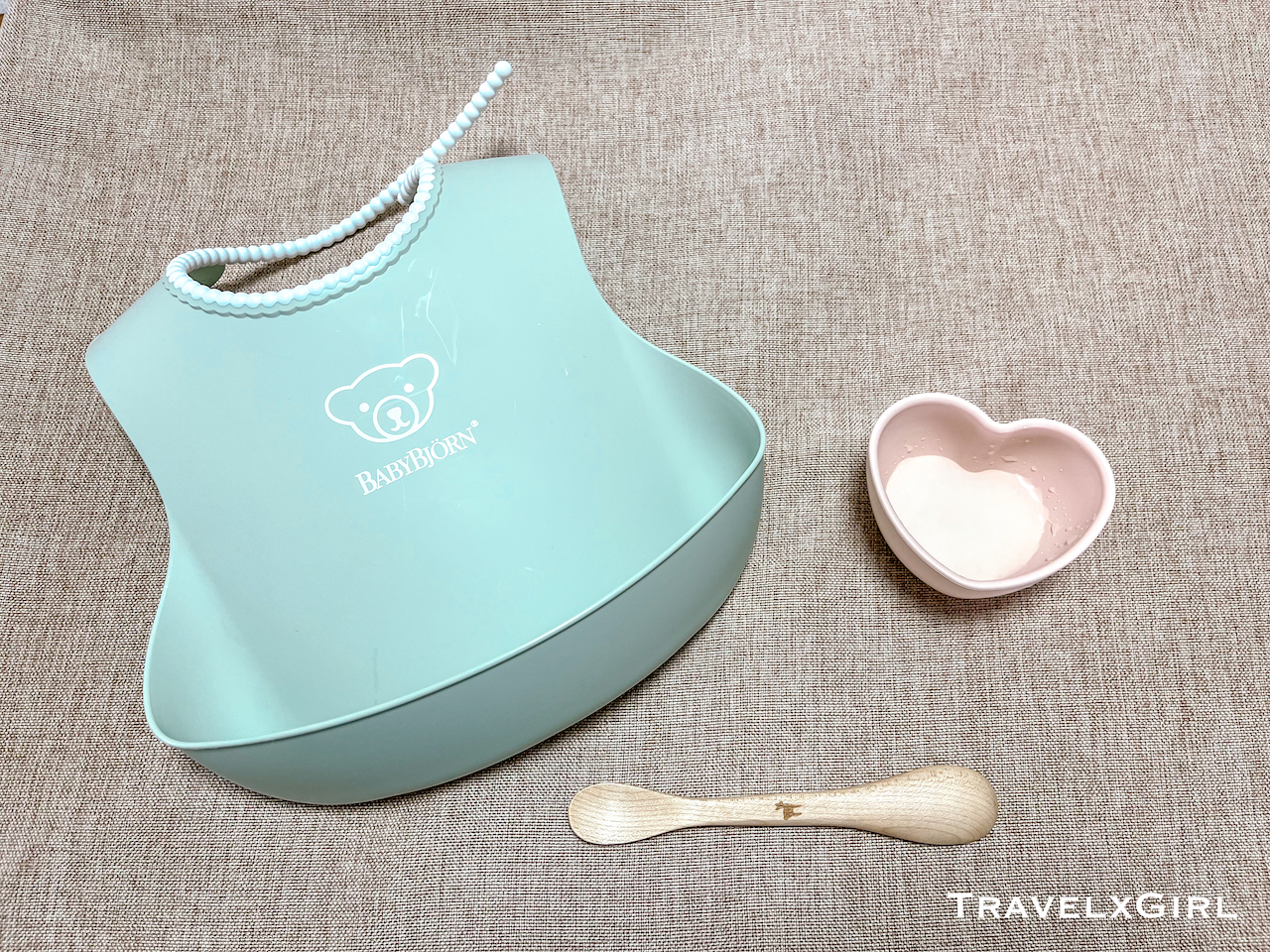
It was a gift and we used it for the beginning! There are 2 sizes, and you can only buy the small size as set. We use the bigger one from the beginning, because our son was quite big. It’s hard type, so some babies might not like it.
Puppapupo Bib
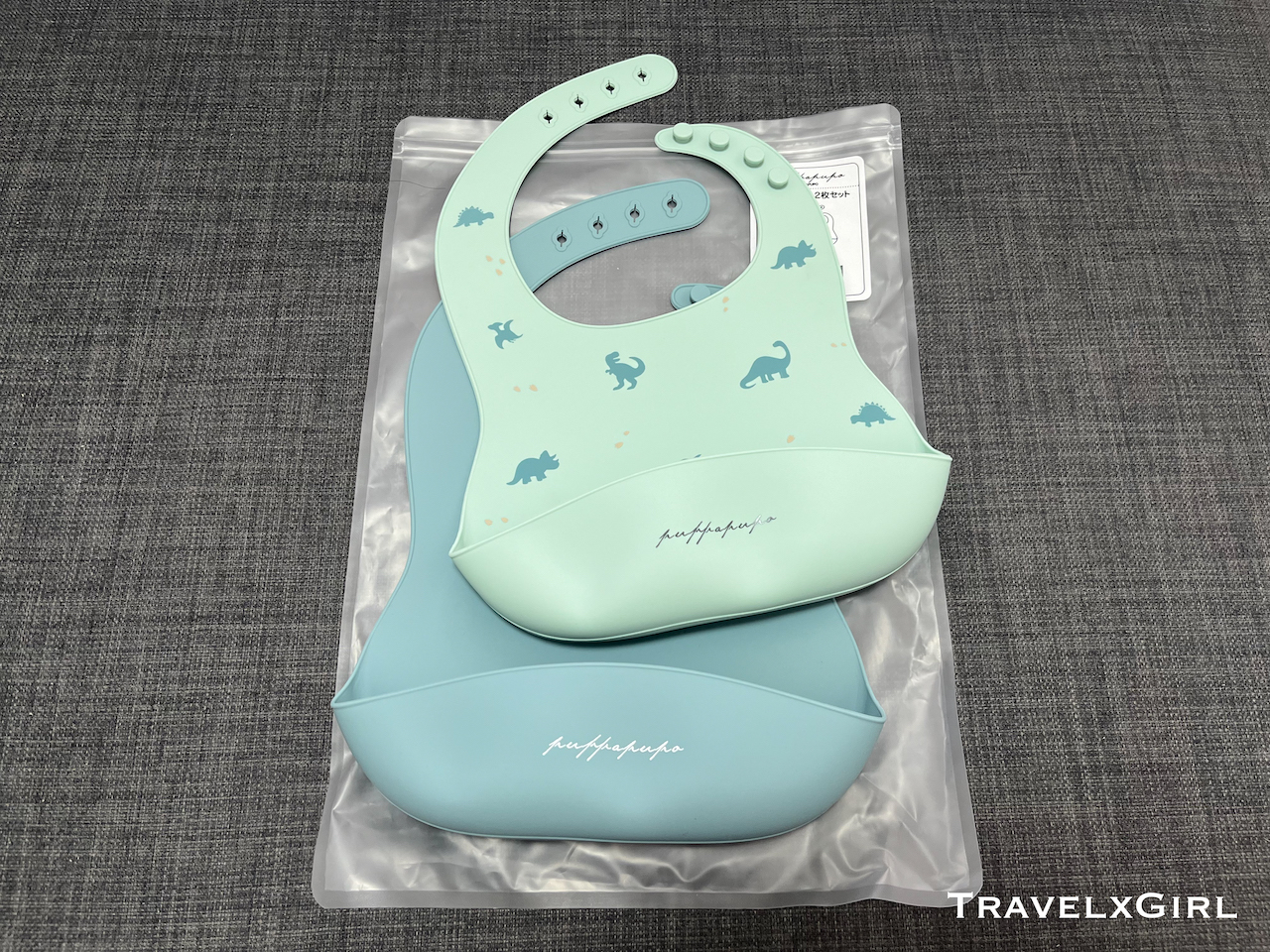
It’s a bit bigger maybe perfect for toddlers, but soft and hold food well. my son uses these! Easy to fold for bringing it out.
Items You Can Skip (Honestly)
Based on experience, these items are not necessary at the start:
- Baby food makers (you can prepare simple foods with basic kitchen tools)
- Large sets of baby dishes
- Multiple food storage containers
- Expensive gadgets marketed for “advanced” weaning stages
You can always add items later once you know what works for your baby.
Japanese Baby Food Culture: What’s Different?
One unique thing about weaning in Japan is the availability of:
- Ready-made baby food
- Single-ingredient purees
- Small portion sizes designed for each stage
Many parents combine homemade food with store-bought baby food — and that’s completely normal here.
Ready-Made Baby Food Easy and Quick
There’s no pressure to do everything from scratch. I found a lot of useful products for baby food! Here are some products that I liked.
The Kindest – Rice Porridge, Rice Cereal, and Vegetable Paste
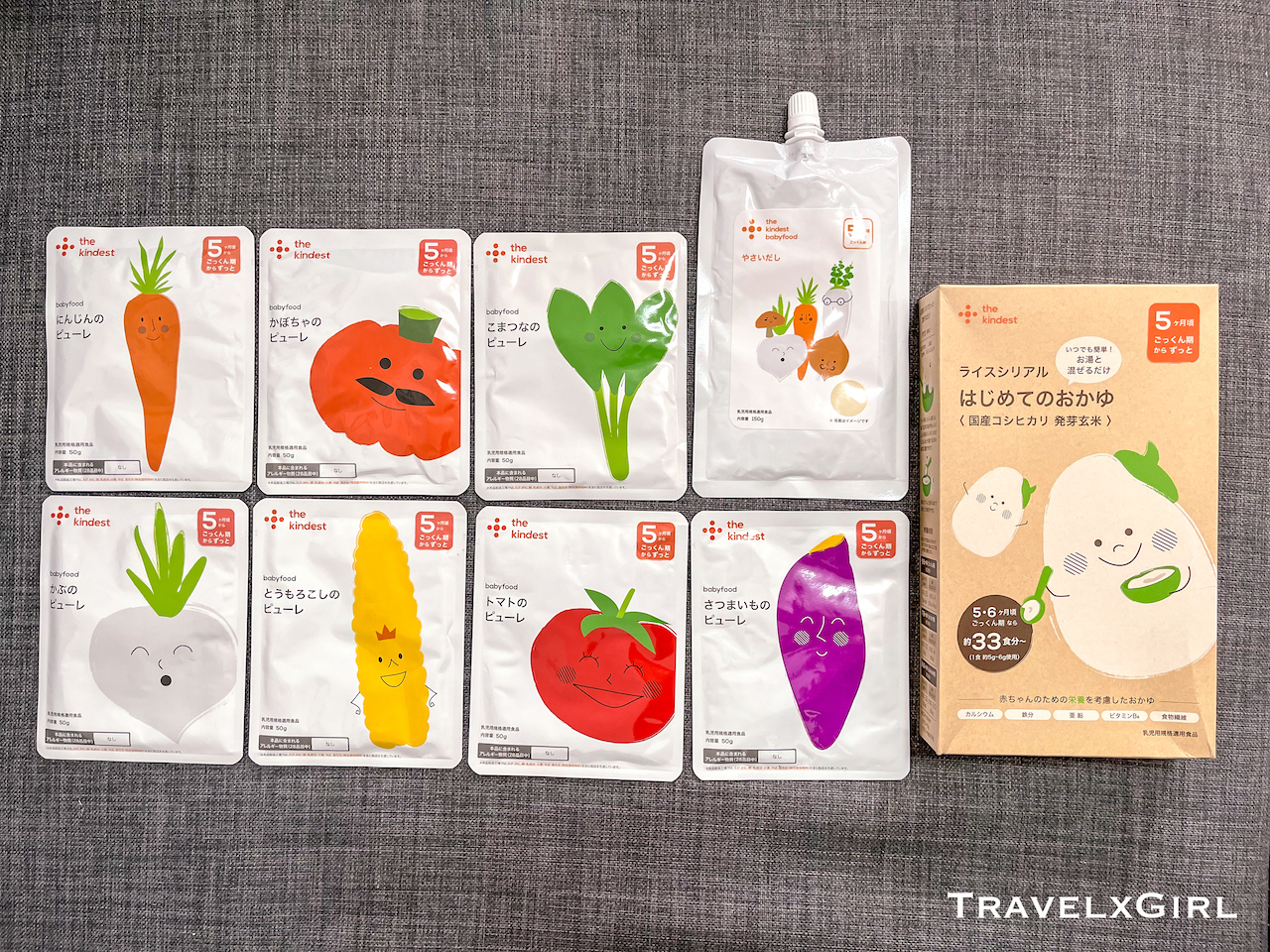
The Kindest offers great options! Rice Cereal is very convenient because you canprepare only the amount you need. Easy to adjust the amount.
Rice Porridge and vegetable paste saved me a lot of time to prepare from scratch! It’s nice that you can keep them with room temperature before opening it.
It’s a bit pricey honestly, however, I felt much better using them because the ingredients are very simple. Also great for gifting to someone!
Matsuya – Rice Porridge
This series is very helpful, that you can use as much amount as you want with hot water. You can start with the simple rice one from 5 months old, and you can also use the ones with salmon, cod, veggies, etc. around 7 months old or later.
Baby Potage – Veggie Flakes
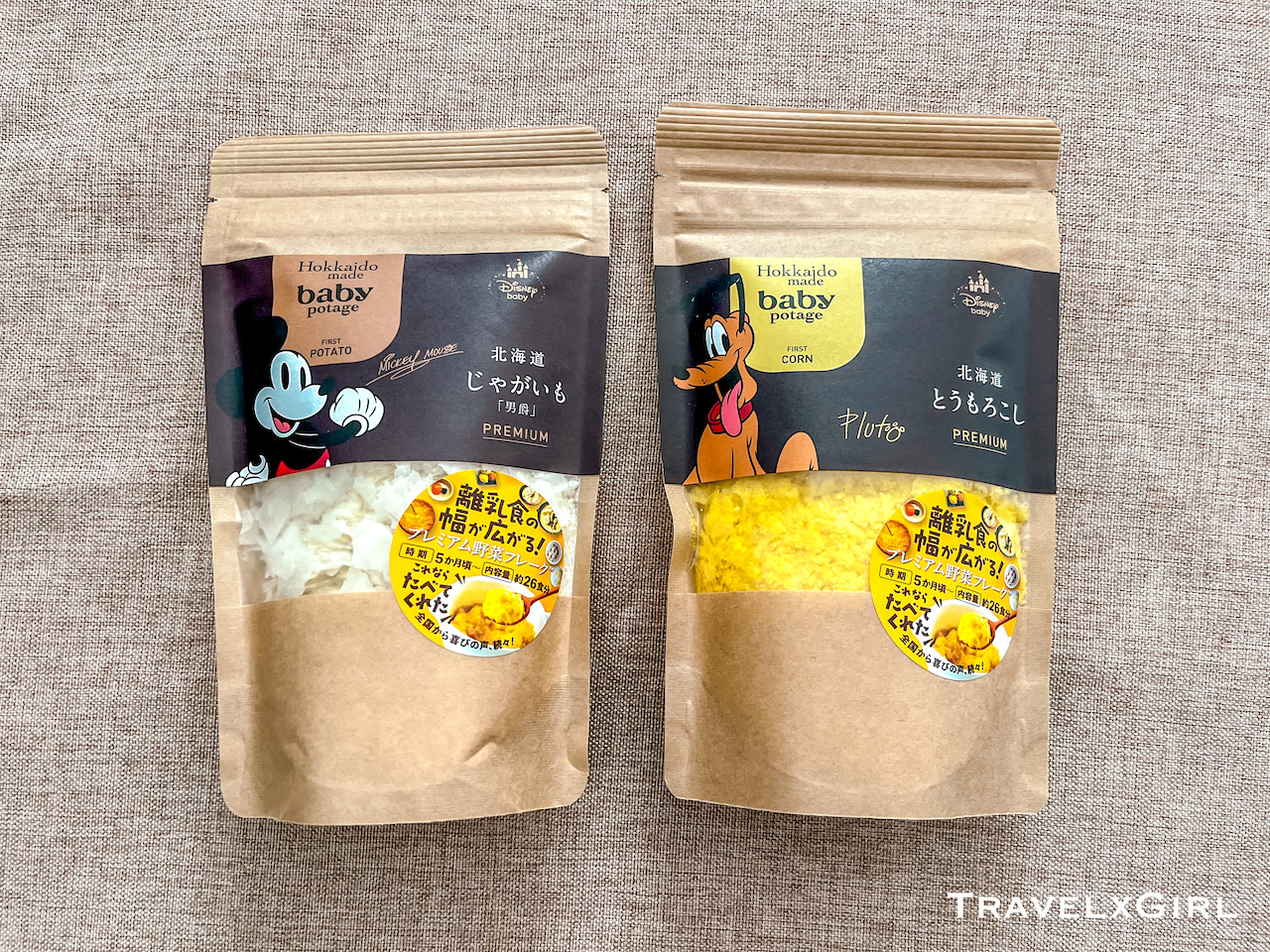
In my opinion, this veggie flakes are the best!! You can just pour some water and it melts well. Not only it;s convenient, and also it’s very tasty! I still use them to make soup quickly.
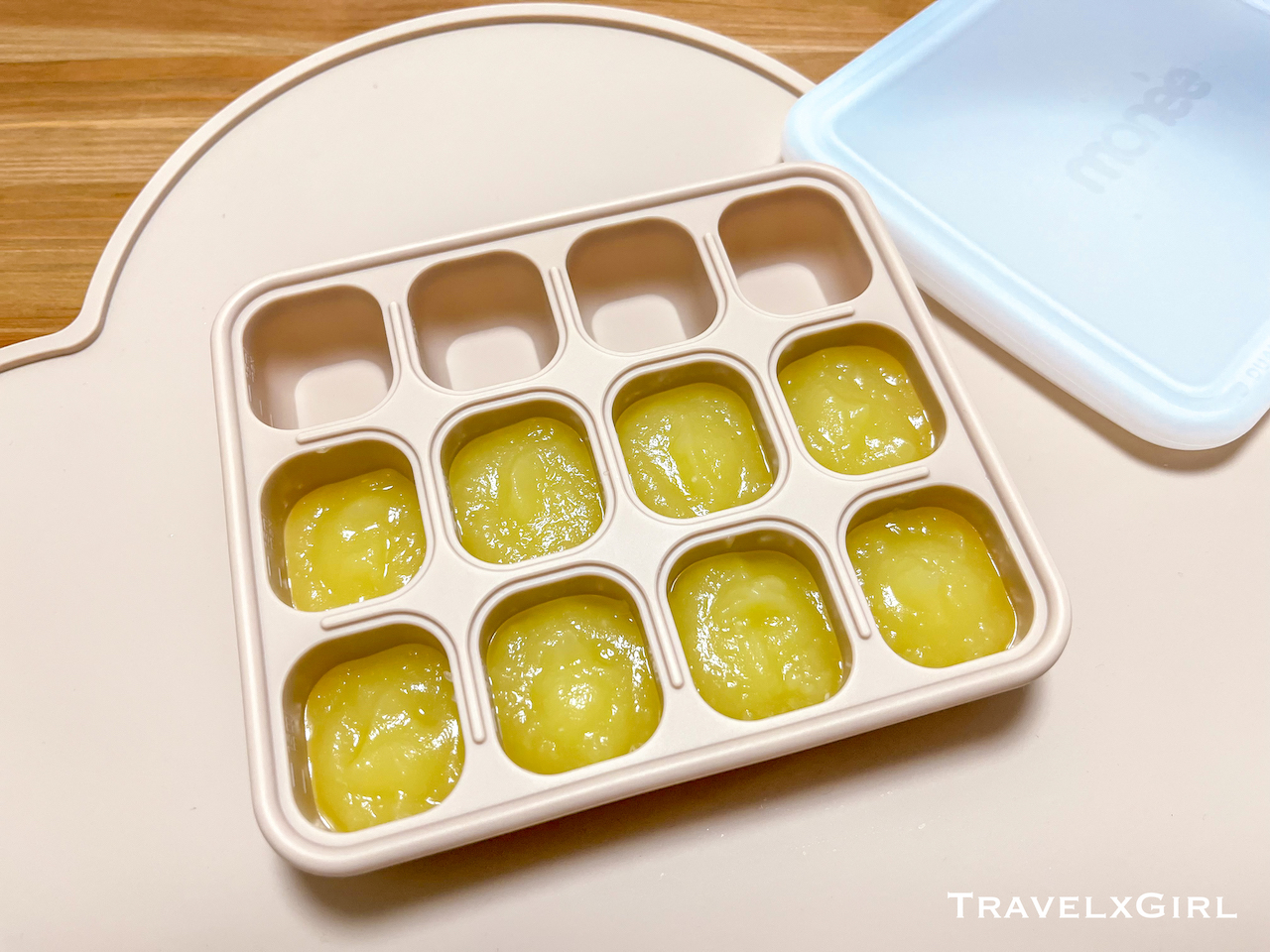
Freezing Block Tray / Container
I think you don’t need to buy containers for 50ml or more for the beginning. Because babies don’t eat that much at first. I eventually bought bigger ones as my son grew up though.
Monee – 15ml Beige
I found it useful that there are lines for 5ml and 10ml in each cell for 15ml. It’s easy for me to push the food out because it’s silicone. The point is, that you should take them out to freezer bag or something after it’s completely frozen so that it doesnt stain.
Final Thoughts: Start Simple and Adjust as You Go
When starting weaning in Japan, less is more. You don’t need to prepare everything perfectly from day one.
Start with the basics, observe your baby, and gradually build your routine.
As your baby grows, you’ll naturally discover what additional items are truly helpful.
👉 If you’re also preparing for childbirth or newborn life in Japan, you may find these guides helpful:
- Giving Birth in Japan: Real Experience, Cost & Hospital System
- Newborn Baby Essentials to Buy in Japan – Coming soon