If you’re planning a family-friendly day trip from Tokyo, Enoshima Aquarium is one of my favorite places to visit with a baby or toddler.
My son first visited when he was just 6 months old, and because we bought an annual pass, we kept coming back as he grew. We’ve now visited with him at 6, 8, 12, 15, and 18 months old.
What I love most about returning to the same aquarium is seeing how completely different the experience becomes as your baby grows. At 6 months, he quietly watched the fish from his stroller. By 18 months, he was walking from exhibit to exhibit on his own and excitedly saying “Dolphin!” during the dolphin show.
In this guide, I’ll share our real experience visiting Enoshima Aquarium at five different ages, along with stroller and baby carrier tips, baby-care facilities, toddler-friendly exhibits, what to bring, and other practical tips from a local mom.
Quick Summary
Pros
- Stroller friendly
- Nursing and diaper-changing facilities available
- Private baby-care room available
- Great for both babies and toddlers
- Indoor attraction that works well on rainy days
- Oceanfront terrace for breaks
- Easy to combine with the beach and other Enoshima attractions
- Easy day trip from Tokyo
Cons
- Many indoor exhibits are quite dark
- Can get crowded on weekends and holidays
- Dolphin show seating can fill up
- Loud sounds during shows may be overwhelming for younger babies
Basic Information
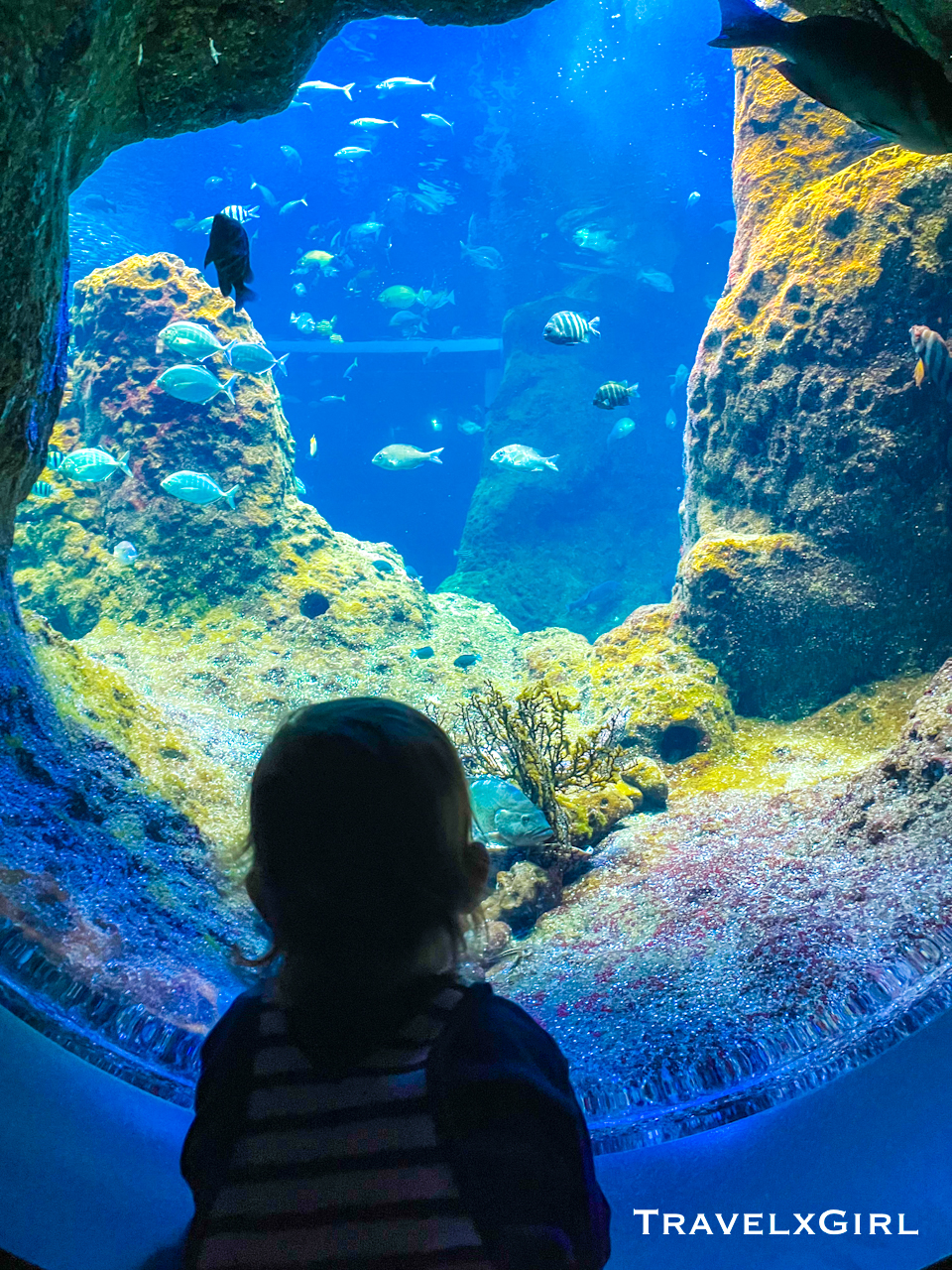
Enoshima Aquarium, also known as Shin-Enoshima Aquarium, is located in Fujisawa, Kanagawa, just a short walk from Katase-Enoshima Station.
It sits right next to the beach, which makes it easy to combine the aquarium with a seaside walk, beach time, or lunch around Enoshima.
Before visiting, I recommend checking the official website for the latest opening hours, event schedules, and ticket prices.
- Location: Fujisawa, Kanagawa, near Katase-Enoshima Station
- Opening Hours: Check the official website before visiting
- Tickets: One-day tickets are available online and at the entrance
- Annual Pass: Available and worth considering if you plan to visit more than once
- Official Website: Check the latest details before your visit
You may also be able to purchase tickets online in advance through Klook.
Is Enoshima Aquarium Worth Visiting with a Baby or Toddler?
Our Verdict
⭐⭐⭐⭐⭐
Yes, absolutely.
After visiting five times between 6 and 18 months old, I think Enoshima Aquarium works surprisingly well across several different stages of baby and toddler development.
For younger babies, the large tanks, colorful fish, moving jellyfish, lights, and water can be visually fascinating even before they understand what they are looking at.
As they get older, the experience changes.
They begin reaching toward the tanks, standing to get a closer look, recognizing animals they’ve seen in books, and eventually walking around and choosing what they want to see next.
The aquarium is also relatively easy to navigate with a stroller, has useful baby-care facilities, and is close to the beach and several family-friendly restaurants.
It’s an easy place to include in a relaxed half-day trip rather than trying to pack too much into one day.
Our Experience at Different Ages
One of my favorite things about having an annual pass was being able to return without feeling like we needed to see everything in one visit.
Here’s how our son reacted at each age.
6 Months Old
Our son first visited Enoshima Aquarium at 6 months old.
At this age, we mostly moved around with him in the stroller.
He was very curious about this completely new environment and spent a lot of time quietly looking at the large tanks, colorful fish, and movement around him.
Enoshima Aquarium is generally easy to navigate with a stroller, although there are a few places where the stroller-accessible route can mean taking a slightly longer way around.
Because many areas inside the aquarium are dark, I also recommend bringing a baby carrier. If your baby becomes nervous or overwhelmed by the darkness, being held close to a parent can feel much more reassuring.
We also tried the dolphin show at this age.
We intentionally chose seats farther away from the front, but the sound was still much louder than he was used to. He was surprised by the noise and ended up crying, so we didn’t stay for the whole show.
That experience definitely reminded me that even if babies enjoy looking at animals, the lights, sounds, and crowds of a show can be a completely different experience.
8 Months Old
At 8 months old, we used a forward-facing baby carrier instead of relying on the stroller.
This worked really well for us.
Without the stroller, it was easier to move between exhibits and bring him closer to the tanks.
Being able to see everything from our height also seemed to make the aquarium much more exciting for him.
He would stare at the animals, look surprised when something moved close to the glass, and sometimes reach his hands toward the tank.
The penguins were especially fun to watch from close up.
Compared with our first visit at 6 months, his reactions were already much more noticeable.
12 Months Old
By 12 months old, he could stand with support.
For this visit, we mainly used a hip seat for moving around the aquarium.
Instead of only watching everything while being carried, he could sometimes stand in front of a tank and look inside for himself.
It was such a small change, but it made the visit feel very different.
If your baby is around this age and still wants to be carried frequently, I definitely recommend bringing either a baby carrier or a hip seat.
Even if they are starting to stand or take steps, an aquarium involves a lot of moving around, and they may not want—or be able—to walk the whole time.
15 Months Old
At 15 months old, our son was walking much more confidently.
He would walk while holding our hands, and when we stayed close beside him, he could also explore some areas by himself.
This was also the stage when things he had learned from books started connecting with what he saw in real life.
He would spot animals and excitedly point while saying words such as “Fish!” and “Penguin!”
That was probably one of my favorite stages.
The aquarium was no longer somewhere we were simply taking him and showing him things.
He was beginning to actively explore it himself.
18 Months Old
At 18 months old, the experience changed again.
This time, he wanted to walk almost everywhere by himself and move from one interesting thing to the next.
Instead of us choosing which exhibit to show him, he often decided where he wanted to go.
He enjoyed the large tanks, jellyfish, penguins, otters, and other sea creatures, but one of the biggest differences was the dolphin show.
At 6 months old, the noise had surprised him and made him cry.
At 18 months old, he watched the entire show while excitedly saying “Dolphin!”
Seeing that change in just one year was such a sweet reminder of how quickly babies grow.
Visiting the same place several times gave us a really clear picture of how much his interests, mobility, and confidence had changed.
Stroller or Baby Carrier?
Enoshima Aquarium is generally stroller-friendly, so you can definitely visit with a stroller.
We found that the best option changed depending on our son’s age.
At 6 months, the stroller was convenient because he could sit or rest while we walked around, and we could use it to carry our bags.
We still brought a baby carrier for darker areas or whenever he wanted to be closer to us.
At 8 months, the forward-facing baby carrier worked better because he could see the tanks from close up while we moved around easily.
At 12 months, a hip seat was especially useful because he wanted to switch frequently between being carried and standing.
By 15 and 18 months, he spent much more time walking.
Local Mom Tip
Rather than thinking of it as stroller vs. baby carrier, I recommend choosing based on your child’s developmental stage.
For younger babies, bringing both can be helpful.
Once your child starts standing and walking, a baby carrier or hip seat can still be very useful when they get tired.
Also keep in mind that many areas inside the aquarium are quite dark.
Babies who are sensitive to dark environments may feel more comfortable being held close to a parent rather than sitting alone in a stroller.
Baby Facilities
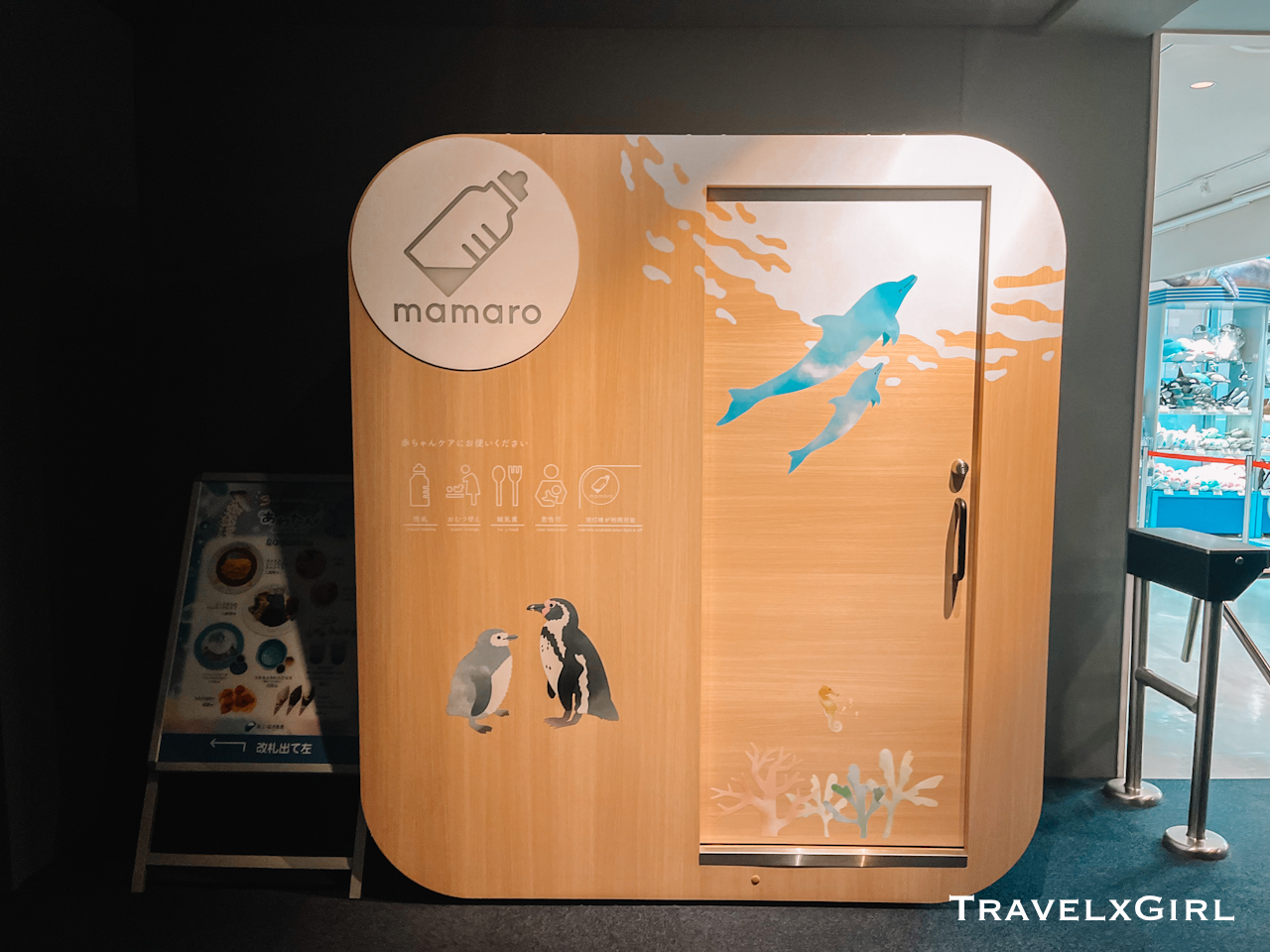
Enoshima Aquarium is very manageable with babies and young toddlers.
We’ve used the baby facilities several times during our visits.
Nursing Rooms
Nursing spaces are available inside the aquarium.
Having somewhere to feed a baby without needing to leave the aquarium made our earlier visits much easier.
Diaper Changing Areas
There are multiple places where you can change diapers inside the aquarium.
I always appreciated having easy access to a changing area rather than needing to plan our route around one specific location.
Baby Care Rooms
There is a private “mamaro” baby-care room.
It’s a fully private space that can be used for feeding, nursing, or changing your baby.
When you’re visiting a busy attraction with a young baby, having a quiet private space like this can be really helpful.
Coin Lockers
Paid coin lockers are available.
These became even more useful once our son started walking.
When you’re constantly holding hands, picking up a toddler, putting them down, and following them from one exhibit to another, having fewer bags makes the visit much easier.
What to Bring
For a baby or toddler, I recommend bringing:
- Snacks
- Water bottle or straw cup
- Diapers
- Wipes
- Change of clothes
- Baby carrier or hip seat depending on age
If you’re visiting in summer or combining the aquarium with beach time, I would also bring:
- Sunscreen
- Hat
- Hat clip
- Extra water
- Light towel
- Extra clothes if your child might play near the beach
Should You Watch the Dolphin Show with a Toddler?
I think the dolphin show is worth trying, but whether your child enjoys it will depend a lot on their age and personality.
The dolphins themselves may be exciting, but the show also includes music, voices, applause, and other sudden sounds.
When our son was 6 months old, we deliberately sat farther away because we thought that would be less overwhelming.
Even from there, however, the sound surprised him and he started crying.
At 18 months old, it was completely different.
He recognized the dolphins, excitedly said “Dolphin!”, and was able to watch the whole show.
So if your baby doesn’t enjoy it the first time, that doesn’t necessarily mean they won’t enjoy it a few months later.
Best Seating Area
Seats closer to the front offer a much more powerful view of the dolphins, but they may also be louder and you may get splashed.
For younger babies—or toddlers who dislike loud noises, crowds, or getting wet—I would choose a seat farther back.
It also makes it easier to leave quietly if your child becomes overwhelmed.
Check Times Before You Go
Show times and event schedules can vary.
If seeing the dolphin show is important to your family, check the schedule before visiting and plan your aquarium route around the showtime.
Favorite Exhibits for Babies and Toddlers
Jellyfish Fantasy Hall
The jellyfish area has been one of the exhibits our son has enjoyed across several visits.
The slow movement, soft lighting, and glowing tanks are visually fascinating for babies.
As he grew older, he started reacting much more actively to what he saw instead of simply watching.
Depending on the season, there may also be projection mapping or other special displays.
Large Sagami Bay Tank
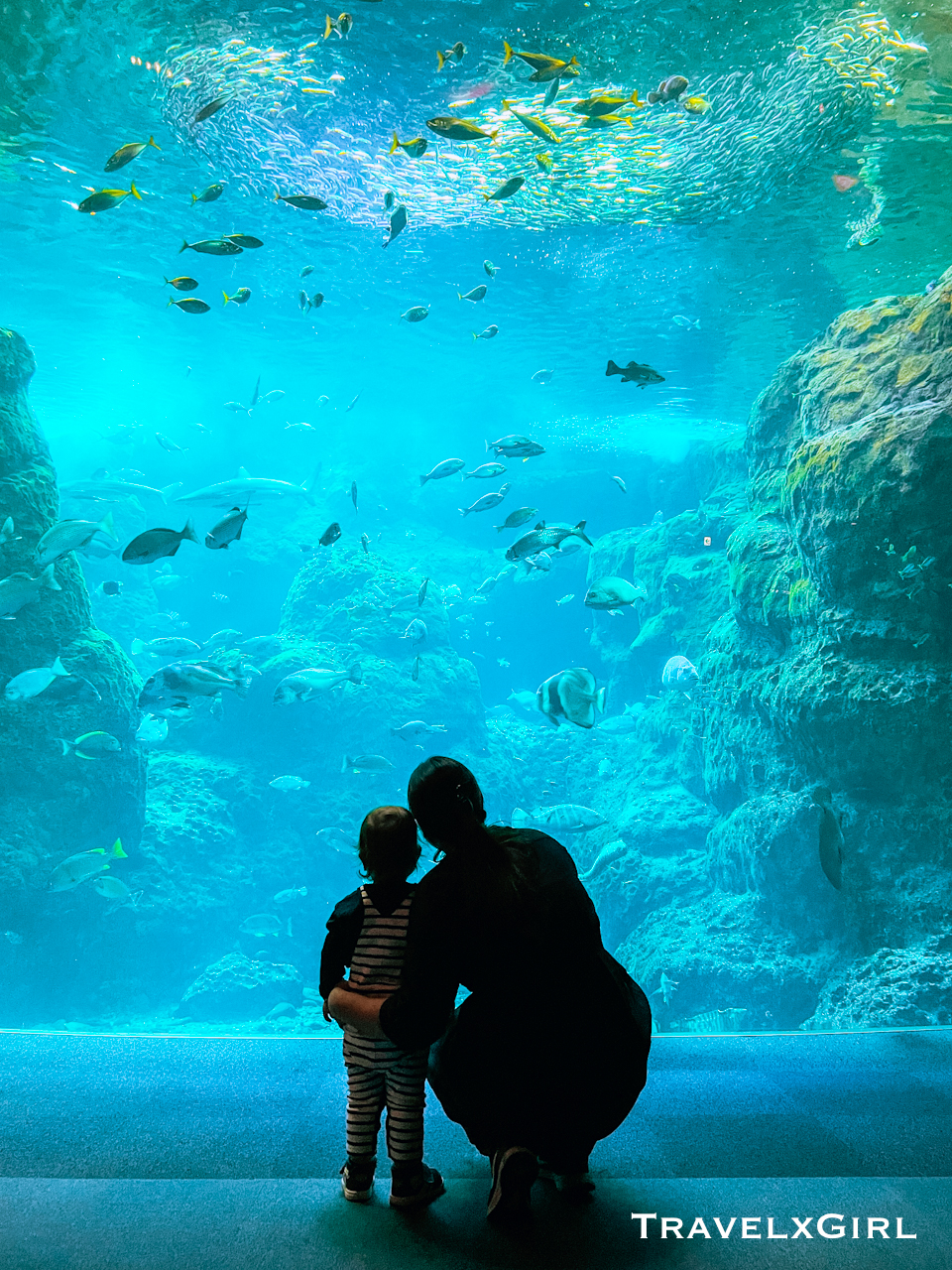
The large Sagami Bay tank is probably one of the most impressive parts of the aquarium for both children and adults.
There are so many fish moving at different depths, from small schools of fish to much larger sea creatures.
Even at 6 months old, our son spent time staring at the tank.
As he grew, he went from watching it from his stroller or our arms to standing in front of it himself.
The viewing area is also great for young children because they can see the tank clearly from a low height.
Penguins
The penguins became even more exciting once our son was old enough to recognize them from books.
At around 8 months old, he was already reaching toward the glass and watching them closely.
By 15 months, he would point and say “Penguin!”
Seeing an animal from a picture book moving right in front of him made the experience much more interactive.
Dolphins
Even before watching the show, you can see the dolphins swimming.
For younger babies who may find the full dolphin show overwhelming, simply watching them swim can still be a fun experience.
By 18 months old, our son was finally able to enjoy the entire dolphin show too.
Otters
Depending on the timing, the otters may be sleeping or hiding.
When they were active, though, our son loved watching them move around.
At 18 months, he was especially interested in anything he could get close to and observe for himself.
Is Enoshima Aquarium Stroller-Friendly?
Yes.
We visited with a stroller when our son was younger, and it was generally easy to move through the aquarium.
There can be places where the stroller route requires a little detour, but overall we found the aquarium very manageable.
A stroller is especially useful for:
- Younger babies
- Nap time
- Carrying bags
- Giving your baby somewhere to rest
However, I wouldn’t rely on the stroller alone.
Bringing a baby carrier as a backup was useful when our son felt nervous in darker areas or wanted to see the exhibits from closer up.
Once your child begins walking, a baby carrier or hip seat may become more practical than a stroller depending on your child.
Tips from a Local Mom
Arrive Early
We usually prefer visiting earlier in the day.
Mornings tend to be easier with young children, and arriving early can help you avoid some of the busiest crowds.
It also gives you more flexibility around naps, meals, and the dolphin show.
Bring Snacks
Having familiar snacks with you can make a huge difference with a baby or toddler.
There are places to buy food and light snacks inside the aquarium, but we still like having something our son already knows and likes.
Take a Break on the Oceanfront Terrace
One of my favorite places inside the aquarium is the terrace overlooking the ocean.
There are counter seats as well as large sofas, so it’s a nice place to take a break while enjoying the sea breeze.
This little terrace has actually become one of the places where I’ve noticed our son’s growth the most.
During earlier visits, he could lie down and rest on the sofa.
Later, he started pulling himself up to stand.
Eventually, he was walking around by himself.
Sometimes the quiet moments between the exhibits become some of the sweetest memories.
There are also food stands and restaurants inside the aquarium.
We once bought some very cute sea-animal-themed breads, which were especially fun with a little one.
Use Lockers
If you have extra bags, consider using a coin locker.
This becomes especially useful once your child starts walking and you want both hands available.
Expect Dark Areas
Many indoor areas of the aquarium are quite dark.
For babies, this can sometimes feel unfamiliar or scary.
A carrier can help if your baby feels safer being close to you.
Once your toddler starts walking independently, also watch their steps carefully because the dark lighting can make the floor harder to see.
Plan Around Nap Time
Nap time can make or break an outing with a baby or toddler.
Our son became used to napping around noon at daycare, so we often planned our aquarium visits around that schedule.
He didn’t usually sleep particularly well in a stroller or carrier, so getting back to the car around nap time worked best for our family.
Of course, every child is different.
If your child naps easily in a stroller, you may be able to stay much longer.
Check the Gift Shop
Don’t skip the souvenir shop before leaving.
There are plenty of marine-themed souvenirs for both children and adults.
We once bought a book there, and our son continued enjoying it long after the aquarium visit.
I like souvenirs like this because they let children revisit the experience again at home.
Take Advantage of Re-Entry
Same-day re-entry is available.
If your child can nap in a stroller or you want to take a longer break, you can leave the aquarium and return later.
This can be especially helpful if you want to spend some time at the nearby beach or have lunch before coming back.
Enjoy the Area Around the Aquarium
One of the nice things about Enoshima Aquarium is that the outing doesn’t need to end when you leave the building.
Katase-Enoshima Station has a unique, colorful design and is worth seeing if you’re arriving by train.
The beach is right next to the aquarium, so depending on your child’s age and the weather, you can walk along the sand or let your toddler play for a little while.
If you visit later in the day, this area is also beautiful around sunset.
For us, combining the aquarium with a little time by the ocean makes the whole outing feel much more relaxed.
Tickets and Annual Pass
One-Day Ticket
One-day tickets can be purchased online or at the entrance.
You can usually buy tickets on the day, but weekends, holidays, spring break, Golden Week, summer vacation, and other busy periods can get crowded.
If your date is fixed, buying tickets online in advance can make the day a little easier.
Annual Pass
We bought an annual pass and ended up visiting five times while our son was between 6 and 18 months old.
For our family, the annual pass was one of the reasons we could enjoy the aquarium without feeling rushed.
Instead of thinking,
“We paid for today, so we need to see everything!”
we could simply leave when our son became tired and come back another day.
It also gave us the unexpected bonus of seeing his development at the same place over the course of a year.
At 6 months, he quietly watched fish from his stroller.
At 8 months, he reached toward the tanks.
At 12 months, he stood to look inside.
At 15 months, he recognized the animals.
And at 18 months, he walked around independently and watched the entire dolphin show.
If you live in Japan or expect to visit Enoshima more than once, I think the annual pass is definitely worth considering.
Nearby Restaurants for Families
If you’re planning lunch nearby, these restaurants are family-friendly options near Enoshima Aquarium:
IL CHIANTI BEACHE
A popular Italian restaurant near the aquarium known for pasta, pizza, and its seaside location.
It doesn’t have a dedicated kids’ plate, but it can still work well for families depending on what your child eats.
Local Mom Tip
The restaurant has parking.
If you’re driving, one option is to park there, visit the aquarium, and return for lunch afterward.
Garb
Garb offers a kids’ plate with items such as:
- Hamburger steak
- Fried shrimp
- Sausage
- French fries
- Bread
- Vegetables
- Fruit
It’s a convenient option for families with younger children.
Aloha Table
Aloha Table has several child-friendly options, including:
- Pancakes
- Udon
- Kids loco moco
The relaxed atmosphere also works well for families.
For a full family-friendly itinerary including beach time, aquarium time, and lunch ideas, check out my related guide:
Internal Link: Enoshima with a Baby or Toddler: A Local Mom’s Half-Day Itinerary
Final Verdict
After visiting Enoshima Aquarium five times between 6 and 18 months old, I can confidently say that you don’t need to wait until your child is a toddler to take them to an aquarium.
At 6 months, our son could already enjoy watching light, movement, and colorful fish.
At 8 months, he began reaching toward the tanks.
At 12 months, he could stand and look inside.
At 15 months, he started recognizing animals from his books.
And by 18 months, he was walking around independently and happily watching the dolphin show.
Every age offered something different.
Enoshima Aquarium is especially good for:
- Babies
- Toddlers
- Families visiting Enoshima
- Rainy days
- Repeat visits if you live nearby
Because it’s stroller-friendly, has useful baby facilities, and sits right beside the ocean, it’s one of my favorite family-friendly attractions around Enoshima.
And if your baby seems too young to “understand” an aquarium yet, I wouldn’t worry too much.
They may experience it differently from a toddler—but watching those reactions change as they grow can become part of the fun too. 💙